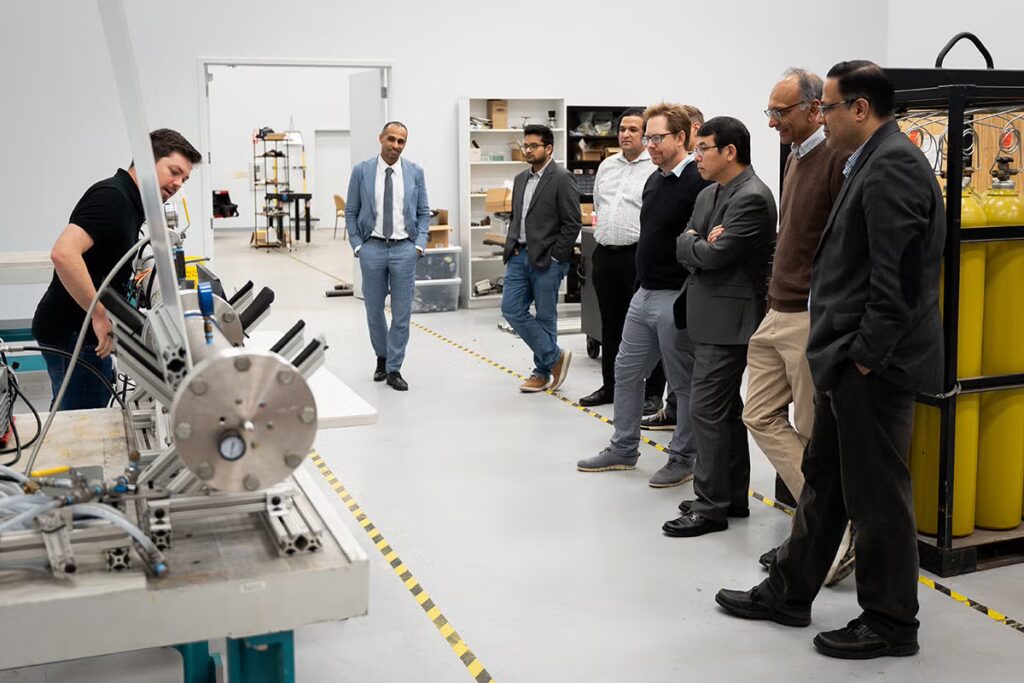
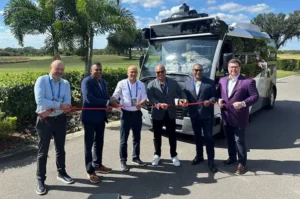
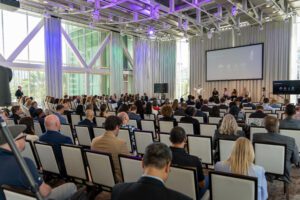
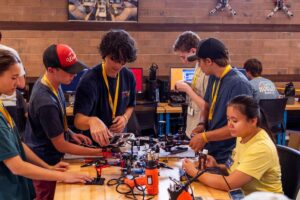
*Photo: UCF, Jordan Smith
Happy holidays, friends.
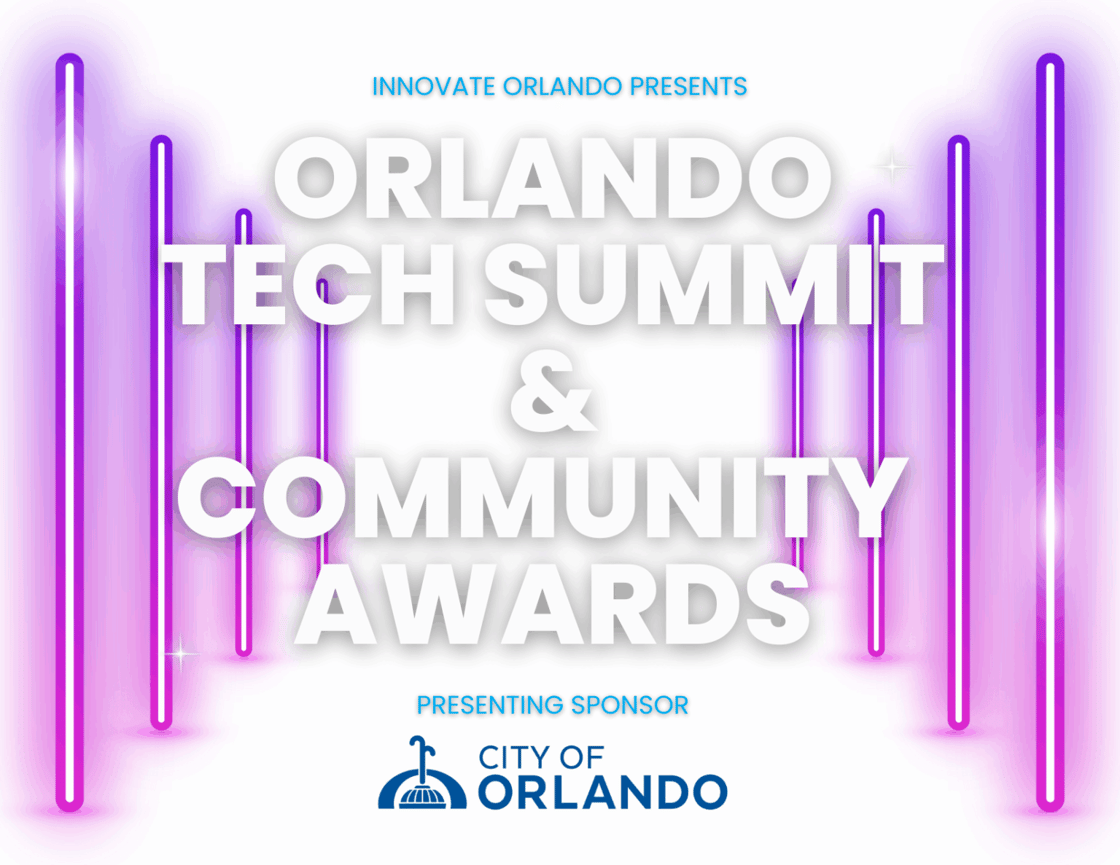
This is the last newsletter of 2025. We are taking next week off and will be back in your inbox in early 2026 prepping for the big event, the Orlando Tech Summit and Community Awards on February 20th.
Getting to write this each week, and to trace how this community is quietly building one of the most important innovation systems in the country, has been an honor, y’all inspire me daily. Thank you for reading, forwarding, arguing with, and building on these ideas alongside me. Let’s dive into everything you need to know.
THE CONVERGENCE PLAYBOOK | Infrastructure as Competitive Advantage
Stop looking for the headquarters and start looking at the infrastructure.
If you are still judging the Orlando region’s tech scene by how many Fortune 500 CEOs have a corner office downtown, you are using a 1990s metric for a 2025 economy. The real signal is not the zip code of the C-Suite. It is the Convergence Infrastructure that powers their products.
This week, three things happened simultaneously that prove the thesis:
These are not separate announcements. They are evidence of one thing: capital is consolidating around Orlando’s defense, aerospace, and research infrastructure. When major contractors and government align on research priorities, and universities respond with infrastructure investment, you are watching ecosystem maturity happen in real-time.
This is not an accident. This is a 60-year arbitrage play. Different headlines. Same operating system.
WHERE CONVERGENCE INFRASTRUCTURE CREATES OPPORTUNITY
You might have seen that Disney invested $1B in OpenAI this week or that Norges Bank invested $5.74M in Kratos. Both get headlines as “Orlando stories.” But as we close the year, we need to distinguish between market signals and economic impact.
The Market Signals: Disney’s $1B isn’t flowing into Orlando bank accounts. It is a global strategic bet on spatial computing. But it validates the specific talent pool we have here. Disney needs physics engines that make Mickey Mouse move believably. Orlando engineers build those engines.
Similarly, Norges Bank’s $5.74M investment in Kratos doesn’t buy new equipment for their Orlando facility. But it signals that the world’s smartest institutional capital is pricing Kratos’s training and simulation division (headquartered here) as a strategic asset.
The Economic Impact: If you want to know what actually pays the mortgage in Central Florida, look at L3Harris and Craig Technologies.
- L3Harris didn’t just get a stock bump. They signed a $200M manufacturing contract. That is real capital flowing into the regional supply chain.
- Craig Technologies winning the SHIELD contract isn’t a signal. It is a purchase order.
- Mayor Dyer catching a drone delivery today isn’t a press release. It is operational infrastructure.
The “Orlando Story” isn’t that global giants like us. It is that our local industrial base (Space, Defense, and Simulation) is winning the actual work.
THE OPERATING SYSTEM THAT TIES THIS TOGETHER
Austin builds SaaS. Boston builds labs. Orlando builds environments where decisions are rehearsed before they matter.
Every credible innovation region has a core competency. Ours is decision environments. These are places where complex systems are modeled, simulated, and stress-tested before deployment.
AI partnerships are advancing shared simulation data environments. Defense, aviation, healthcare, and autonomy teams are training inside interoperable synthetic worlds. That reduces cost and accelerates readiness.
Across defense, space, healthcare, and entertainment, the same core capabilities repeat:
- Physics-based modeling (motion, force, gravity, materials)
- Real-time simulation platforms (game engines, simulators, low-latency systems)
- Applied spatial computing (immersive, perception-aligned technology)
- Human performance and cognitive systems (biomechanics, perception, stress response)
- Human-in-the-loop AI (adaptive systems, behavior modeling)
This convergence infrastructure is reinforced by institutional continuity (UCF’s simulation research, Team Orlando’s supply chain), applied R&D (hypersonics initiative, robotic surgery programs), and workforce pipelines that span government, academia, and industry.
When the same technical stack powers entertainment, defense, healthcare, and space operations, talent becomes elastic and systems scale faster. This is not an accident of alignment. This is what happens when physics does not care what problem you are solving.
Proof Points:
FOUNDER PROOF: WHO IS ACTUALLY USING THIS
The infrastructure only matters if you can access it. And you can.
Kalogon: Manufacturing at Scale
Kalogon, a Melbourne-based startup, is building a $50M production facility on the Space Coast
They are not doing this because they got a subsidy. They are doing it because they can access the physics-based modeling and applied spatial computing infrastructure that makes space manufacturing competitive. When you move from concept to $50M capital deployment, that signals confidence in the underlying infrastructure and the talent pipeline to staff it. Kalogon is betting that access to convergence infrastructure makes their manufacturing operation more competitive than alternatives elsewhere.
ThreatLocker: Founder Conviction
ThreatLocker, a Maitland-based cybersecurity firm, did not just lease expansion space
They bought a building for their “second headquarters.” You do not purchase real estate in declining ecosystems. You purchase when you are confident in the talent pipeline and competitive advantage. For ThreatLocker, that advantage is built on human-in-the-loop AI and real-time threat response. These are the same convergence infrastructure capabilities that power other high-performance systems here. They are not just staying in Orlando. They are doubling down.
The Founder Pattern: Find the convergence infrastructure solving your core problem. Access it through UCF partnerships, regional introductions with support from organizations like Cenfluence, Innovate Orlando or Orlando Economic Partnership, or existing supplier networks. Scale by serving multiple markets with the same technical capability. Kalogon and ThreatLocker are executing this playbook.
A NECESSARY REALITY CHECK
Not every outcome is a win.
Orlando-based Luminar entered Chapter 11 and sold its semiconductor business. That is not a failure of the ecosystem. It is evidence of one. In real innovation systems, companies fail, talent recycles, IP migrates, and new ventures form. Regions without losses are not resilient. They are protected.
WHAT CONVERGENCE INFRASTRUCTURE LOOKS LIKE IN PRACTICE
Mayor Buddy Dyer stood outside City Hall and received the first official drone delivery in Orlando. A package from Walmart and Wing, hovering down in real-time. Not a pilot. Not a test. A real deployment with full city coordination.
Every founder and entrepreneur watching that moment understood something: Orlando permits differently than other cities. You do not debate innovation. You deploy it. You learn from it. You scale what works.
That is convergence infrastructure as permission architecture. Not as an idea. As a structural reality that shapes opportunity.
THE PLAYBOOK: HOW TO ACCESS THIS
Play 1: The Simulation Arbitrage (Gaming to Medicine)
Do not hire a medical illustrator. Hire a game designer. The physics engines powering Madden are the same ones powering robotic surgery. EA Sports dominates US game sales with 6 of the top 20 best-selling games because they operate adjacent to UCF’s simulation talent and entertainment expertise. That same talent pipeline now powers the Lake Nona robotic surgery and simulation epicenter, where healthcare systems are training surgeons using the same real-time platforms that power competitive gaming. UCF students are expanding medical education through virtual reality research, creating a pipeline that connects classroom simulation to clinical training to patient safety.
This is not novel. Surgeons have been learning from simulators for decades. What is novel is that the same game engines powering entertainment are now reducing surgical complications and improving patient outcomes. That is convergence infrastructure working.
Access Point: Partner with UCF’s simulation research. Hire engineers who have worked across entertainment and medical systems. Deploy real-time rendering technology across both sectors.
Reference: EA Sports hosts Madden Bowl 2026 finals during Super Bowl week.
Play 2: The Industrial Base (Space to Defense)
Do not just launch rockets. Build the supply chain that keeps them flying. 100 launches a year creates massive demand for precision manufacturing, crew training systems, and hypersonics research. Florida’s Space Coast is past nostalgia. It is operating like a production facility, not a spectacle.
SpaceX logged its 100th Space Coast launch. Six launches in a single week followed. Space industry leaders moved into governance roles, Sidus Space CEO on the Canaveral Port Authority Board. Policy, cadence, and infrastructure are aligning. Modern space operations are no longer defined by launch vehicles alone. They are defined by launch simulation, crew training, mission rehearsal, and cognitive readiness. All of these draw on the same physics-based and human-performance systems used in defense training.
This represents operational maturity. When government, military, and commercial operators coordinate around the same simulation infrastructure, launch frequency becomes sustainable. Six launches in a week is not a publicity stunt. It is a rhythm made possible by crew training systems that compress launch timelines.
Access Point: Tap into the Space Coast supply chain through Team Orlando. Partner with Daytona State College’s new aerospace technology program. Access the hypersonics research infrastructure at UCF. Connect with the Space Force Association’s National Spacepower Center now building policy infrastructure.
Play 3: The Smart Region (Civic Tech to Daily Life)
Do not wait for the future. Permit it. Our local governments are actively deploying the real-time systems, autonomy, and applied AI that other cities are still debating in committee.
These are not pilots designed for press releases. They are deployments designed to reduce friction, validate technology at scale, and signal to founders that the region moves fast on implementation. When mayors coordinate drone deliveries, city clerks deploy virtual queues, and police departments test new technology, that creates space for entrepreneurs to test ideas at municipal scale before scaling nationally.
Access Point: Connect with county and municipal governments piloting technology. Understand that Orlando permits civic innovation differently than other regions. DeLand is building 1.5M square feet of industrial tech park to support this expansion.
THE INFRASTRUCTURE IS SCALING
You cannot fake square footage.
Industrial parks, second headquarters, production facilities, and mixed-use innovation districts are moving forward across the region. Developers are responding to sustained labor demand tied to defense, space, healthcare, and applied technology programs.
You do not pour concrete for vibes. You respond to contracts and workforce signals.
This signals confidence in the underlying infrastructure and the talent pipeline supporting it.
ALSO HAPPENING THIS WEEK
Supporting the Ecosystem:
THE VERDICT
Line up the evidence:
L3Harris’s $200M validates our defense infrastructure
Craig Technologies’ contract validates our homeland security infrastructure
UCF’s Hypersonics Initiative validates our research infrastructure
The same technical stack powers entertainment, defense, healthcare, and space
Founders are actively accessing this infrastructure (Kalogon & ThreatLocker)
Infrastructure is scaling in response (industrial parks, mixed-use districts, new facilities)
Risk is real and recycling is active (Luminar as proof of market discipline)
Orlando’s advantage is not sector dominance. It is capability convergence.
When physics-based simulation, real-time platforms, human performance systems, and adaptive AI are reused across industries, talent becomes elastic and systems scale faster.
This is not a narrative being sold. It is a system being observed.
THE ASK
Ecosystems do not compound without participation.
If you are building, investing, hiring, or deploying technology in Central Florida:
- Share roles that benefit from cross-industry talent
- Nominate leaders shaping these systems
- Bring partners into the room
- Access the infrastructure through UCF, Team Orlando, and existing networks
Orlando’s advantage only compounds if it is used. We are not early. We are operational.
As we wrap 2025, thank you for letting me share this work with you. Whether you are building companies, running labs, flying missions, teaching students, or just quietly paying attention, you are the reason this ecosystem exists. Rest well, enjoy your people, and come back in 2026 ready. We have a lot more to build together.
See you in the ecosystem.
P.S. To the drivers in Brevard County: I know the six launches in one week are ruining your commute, but remember. That represents the sound of GDP leaving the atmosphere. Turn up the radio and enjoy it.
— Sheena
CEO, Innovate Orlando