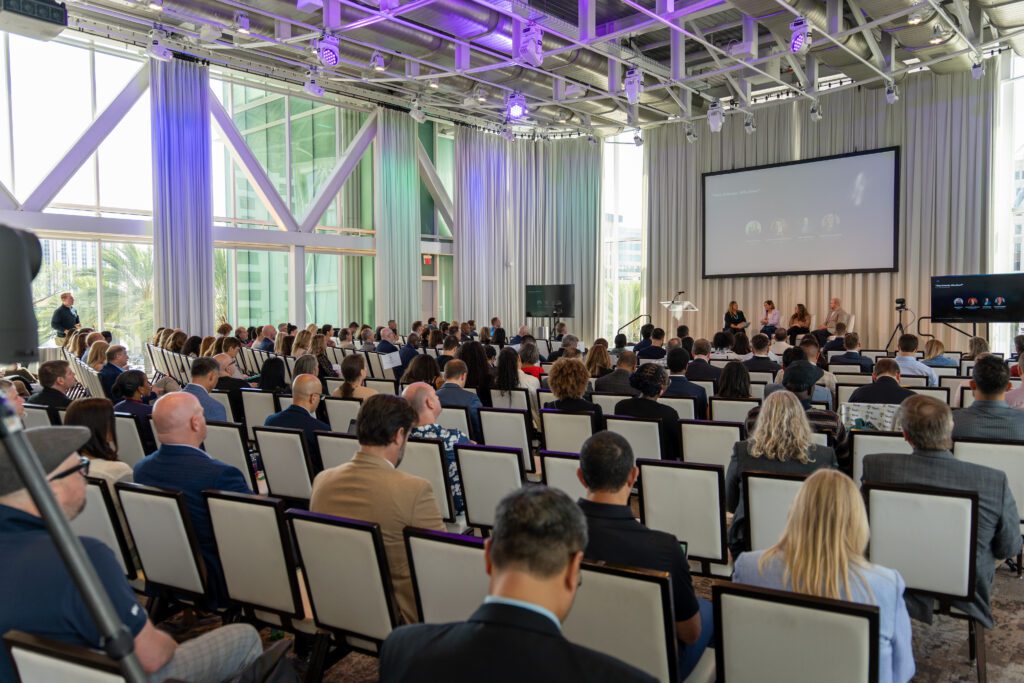
*Photo: Innovate Orlando
One week ago, I stood on stage at the Dr. Phillips Center and welcomed more than 250 of the sharpest minds in Central Florida’s innovation ecosystem to the Orlando Tech Summit and Community Awards. This week, I sat down to compile everything that happened in our region’s tech economy since. What I found was a news cycle that felt less like a routine roundup and more like a region mid-transformation. Lake Nona’s Impact Forum, launches and setbacks on the Space Coast, drone programs being built at the federal and city level simultaneously, a billion-dollar company collapsing in bankruptcy while Forbes-recognized founders took their bow, and Waymo rolling driverless cars down I-4.
Here’s the thing that we don’t say out loud enough: AI is no longer a sector. It’s the operating system underneath every other story in this newsletter. Waymo runs on it. The DoD’s new LYNX platform uses it. SpaceX merged with an AI company to put data centers in orbit. Meta is spending hundreds of billions on chips to run it. The question for Orlando isn’t whether AI matters here. It’s whether we’re building the talent, the companies, and the infrastructure to lead in a world where every industry has an AI layer. Last Friday’s Tech Summit made a compelling case that we are. Let’s get into it.
Orlando Tech Summit and Community Awards Recap
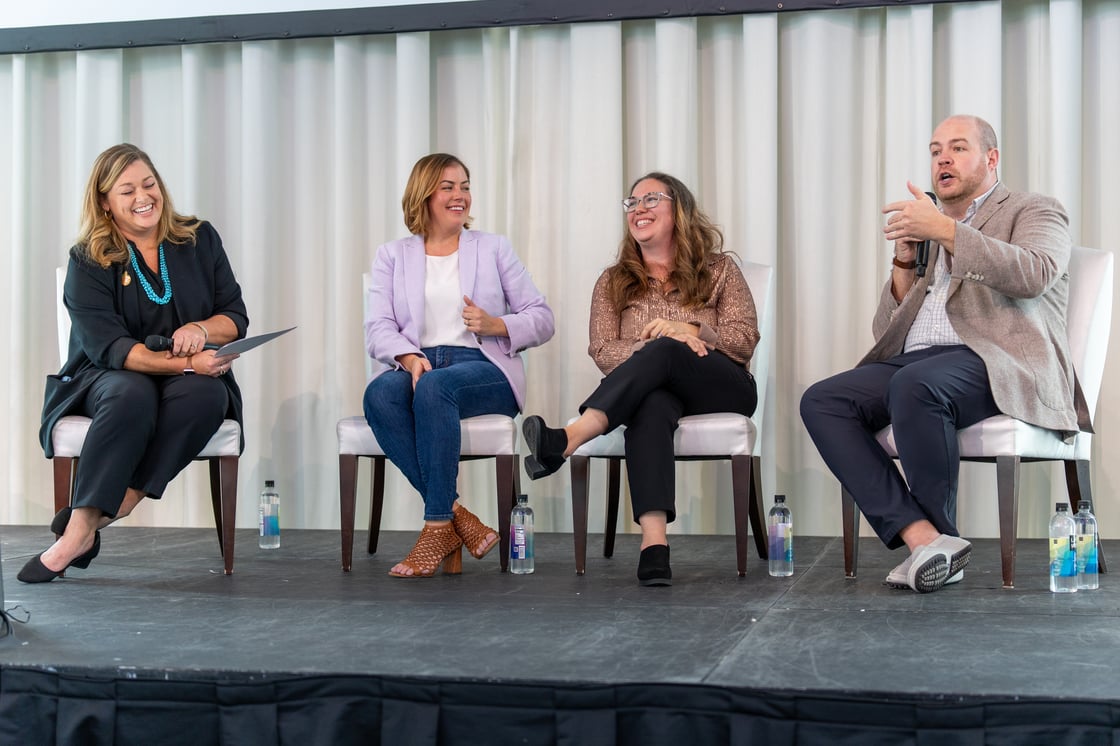
Last Friday at the Dr. Phillips Center, Innovate Orlando brought together more than 250 founders, investors, engineers, university leaders, and community builders for the Orlando Tech Summit and Community Awards. The afternoon was equal parts ecosystem report card, founder confessional, and genuine celebration of the people who built this place. Mayor Buddy Dyer opened the program, and the energy in the DeVos Family Room never let up.
The first half of the afternoon made the ecosystem argument. Andrea Wesser-Brawner, Mike Harding, and Danielle Permenter laid out the data on Orlando’s tech economy and the path to becoming a top-10 global innovation hub. The honest takeaway: the ingredients are here, the talent base is diverse and growing, and the gap that remains is capital density. Kyle Morrand and Michael Tschanz followed with the session that earned its title, tracing Orlando’s technical DNA from JFK’s moonshot and Disney’s EPCOT to today’s convergence of simulation, XR, AI, robotics, and digital twins. This is the origin story the region needs to tell more often and louder, we are home to Moonshots & Magic!
The second half delivered the founder reality. Six builders who created and exited real companies through the Orlando ecosystem, including Starter Studio, sat on stage with Dawn Haynes and told the unvarnished truth about what it took. Then Ken Hall and Sal Rehmetullah delivered one of the most important conversation of the day: Orlando’s biggest wins required global ambitions and outside capital from day one. That’s not a critique. It’s the roadmap for what the ecosystem needs to build next.
Loyal Pyczynski, Head of Metaverse Emerging Experiences at Meta, closed the program with a keynote that traced his journey from military simulation in Orlando to Walt Disney Imagineering and beyond. It was the perfect ending: an Orlando story with global reach, told by someone who never forgot where it started. The evening moved directly into IMMERSE, the Creative City Project’s festival across downtown Orlando, carrying the day’s energy into the city itself.
Speakers and Moderators: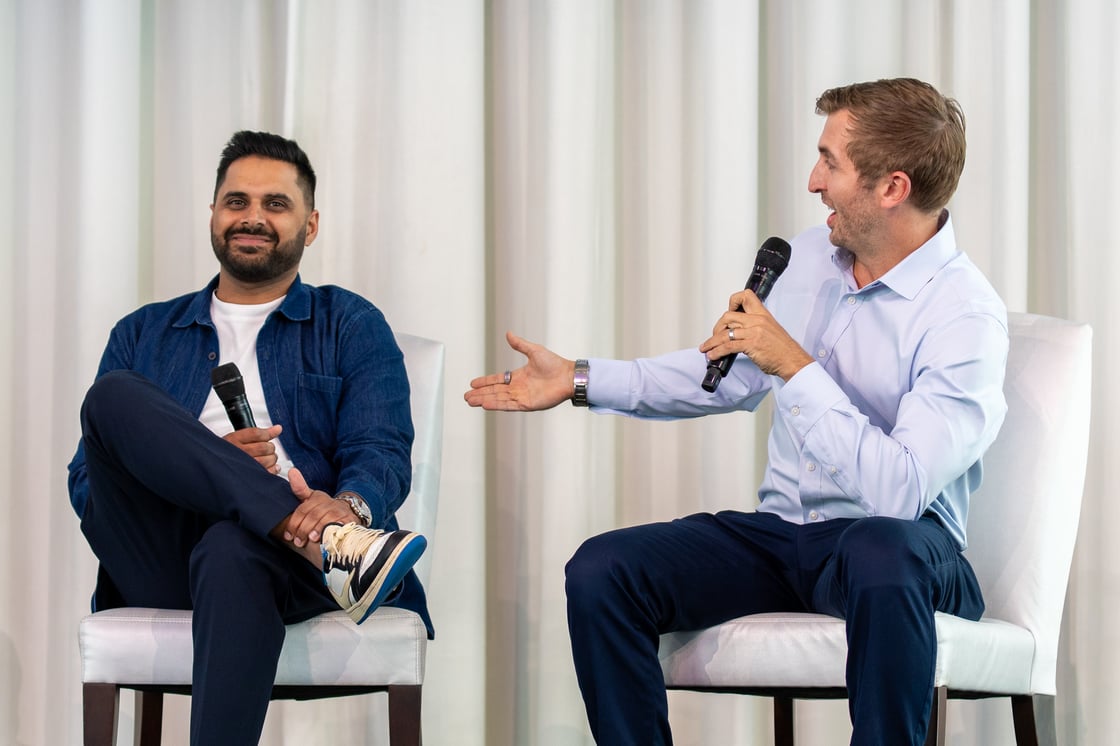
- Sheena Fowler, CEO, Innovate Orlando (MC)
- Mayor Buddy Dyer, City of Orlando
- Andrea Wesser-Brawner, Chief Strategy Officer, Florida High Tech Corridor
- Mike Harding, Associate Vice President of Partnerships, UCF
- Danielle Permenter, Chief Operating Officer, Orlando Economic Partnership
- Kyle Morrand, Founder, Mirror Factory (Moderator)
- Michael Tschanz, Founder, Tschanz Tech
- Dawn Haynes, CEO, StarterStudio (Moderator)
- Greg Pollack, Founder, StarterStudio
- Rainer Flor, Founder, PhotoDay
- Trevor Perrott, Founder/CEO, Censys Technologies
- Joe Sleppy, Founder/CEO,
- Capacitech Energy
- Ali Tamijani, CEO/Co-Founder, Novineer
- Shamiyon Jett, Founder/CEO, Oviieai
- Jaques Fu, Founder, PETE; Co-Founder, Stax
- Ken Hall, Partner, DeepWork Capital (Moderator)
- Sal Rehmetullah, Co-Founder, Stax; CEO/Co-Founder, Worth AI
- Loyal Pyczynski, Head of Metaverse Emerging Experiences, Meta
- Aubree Arias, Chief Strategy Officer, iServ (Award Presenter)
- Adam Scheinberg, Vice President of Information Technology, Massey Services (Award Presenter)
- Troy Sands, Ernst and Young (Award Presenter)
Exhibitors (Sponsored by OrlandoPreneur)
- Rapid Prototyping Services
- AIAR, Digital Brew
- UCF Business Incubation Program
- StarterStudio
- Hook Security
- AI Vault
- WEB3 CFL
- TransformXD
- RoofBids
- Hello World Solutions
- Central Florida Tech Grove
- BOT (Building Our Tech)
- 1st Robotics
- Developers.net
- OIL
- Principal Financial
- Florida High Tech Corridor
- City of Orlando
- Cogent Bank
- Actional Counsel
Award Finalists and Winners:
Spark Award (presented by iServ):
- Dr. Andrew Mahyari, AIVault
- Dr. Diane Diaz, GRIT Government Solutions
- Ksenia Moskalenko, Florida High Tech Corridor
- Morgan Harwell, CymSTAR (WINNER)
- Safia Porter, Building Our Tech
Legacy Launchpad Award (presented by Massey Services):
- Ariane Fikki, VRARA, Unreal Orlando, Space Force Association
- Cassandra Willard, Blackstone LaunchPad at UCF (WINNER)
- Dawn Haynes, StarterStudio
- Dr. Tracy Boyd, Aligned Growth Solutions
- Jack Henkel, Florida High Tech Corridor
Hall of Fame (presented by EY):
- Clint Graumann, NUVIEW
- Dr. Carolina Cruz-Neira, Institute for Simulation and Training, UCF (WINNER)
- Dr. Kay Stanney, Design Interactive
- Jacques Fu, PETE, Worth, Stax (WINNER)
- Jonathan Taylor, Sighthound, Zendicate Ventures, Voxeo (WINNER)
- Michael Tschanz, Tschanz Tech
- Rajiv Menon, Informulate
- Robert Catto, Full Sail University
Thank you to every speaker, exhibitor, finalist, winner, and attendee who made it possible. You are the ecosystem.
Startups, Founders and Ecosystem
This fortnight was a masterclass in the full range of startup outcomes, and Orlando needs to hold both ends of that range honestly. Start with the hard one: Luminar Technologies, once a ‘unicorn’ valued at over $12 billion at its peak (post-SPAC valuation), finalized its Chapter 11 sale process this January. Following a Section 363 bankruptcy auction, the U.S. Bankruptcy Court approved the sale on January 27 to Seattle-based competitor MicroVision, which acquired Luminar’s lidar assets, including the Iris and Halo IP, for $33 million in cash. The deal closed around February 3. Luminar had filed Chapter 11 on December 15, 2025. This is not primarily a product story. It’s a capital allocation story about the distance between venture-fueled valuation and durable revenue, and about what happens when a company runs out of runway before it runs out of ambition. Central Florida should sit with that lesson rather than look away from it.
On the other end: Capacitech landed on Forbes’ 30 Under 30, UCF founders claimed multiple additional spots, and the Starter Studio Startup Showcase gave the room founders who had built and exited real companies and showed up to tell the truth about what it took. OneRail, the Orlando-based last-mile logistics platform, opened a new engineering office in Poland, because scaling internationally is a thing Orlando startups do now. Intelligence Factory is bringing new jobs to Lake County near Eustis, because the startup economy is no longer contained to the I-4 corridor. The capital question raised at the Tech Summit applies directly here: these companies are growing. The question is whether Orlando’s capital ecosystem grows fast enough to keep them close.
Read more:
- The Home Repair Industry Is Finally Going Digital, and This Startup Wants to Lead the Transformation
Defense and Government Tech
Orlando’s $7 billion defense training and simulation cluster kept busy, and this week’s news illustrates exactly why that number keeps growing. The sale of Dignitas Technologies reflects a cluster mature enough that primes are shopping for talent and IP rather than waiting to build it. Kratos Defense, a national defense technology company with a substantial presence at the Central Florida Research Park (the largest research park in Florida and fourth largest in the U.S. by number of companies), landed a $61 million Navy contract modification. Kratos’s footprint at CFRP isn’t accidental. It’s the direct result of decades of UCF and the defense industry growing up together, literally next door to each other. The defense cluster isn’t a collection of companies. It’s an ecosystem with shared infrastructure, shared talent, and shared institutional memory.
Drones had a big week, and then another big week. As we talked about recently, ZenaTech opened its 23rd global Drone as a Service location in Orlando, targeting federal agencies and military infrastructure with full operations expected by April 2026. Then the Orlando City Council approved a $6.8 million citywide “Drone as First Responder” program, deploying nine automated rooftop docking stations so drones, using Axon Prepared technology, can arrive at emergency calls ahead of patrol cars. Federal drone infrastructure and municipal drone deployment being built simultaneously in the same city is not coincidence. That’s a region that has decided drones are infrastructure, the same way it decided simulation was infrastructure thirty years ago.
On the simulation and interoperability front, the IDEA Lab’s LVCDOC made its first live connection with the Joint Staff J-7’s JIIL, a genuine milestone in joint force operations. The National Center for Simulation named its 2026 Executive Board, with Janet Spruill of Aptima as Chair, a transition at the nonprofit that serves as the organizational spine of the entire cluster. The Army and Marine Corps announced joint shared range software development to simplify training for range operators and improve compatibility across installations, a cross-service standardization move that runs directly through Orlando’s simulation industry. AFCEA Orlando’s Defense Forum Breakfast, co-hosted with Women in Defense Central Florida and CPAG, was the kind of convening that turns into contracts.
The most actionable item in this entire issue: the Department of Defense’s Office of Small Business Programs launched LYNX, a new AI-powered digital platform that helps companies build defense contractor profiles, complete supplier readiness assessments, and receive AI-generated roadmaps into the defense industrial base. The barrier to entry in defense has never been innovation. It’s been navigation. For Orlando’s non-traditional suppliers, defense-adjacent startups, and small businesses sitting on the edge of this $900 billion market, LYNX is worth 20 minutes of your time right now. The SCI Hackathon 2026and Embry-Riddle’s aerospace Capture-the-Flag contest are actively building the next generation of defense tech talent.
Read more:
Emerging Tech, AI and Innovation
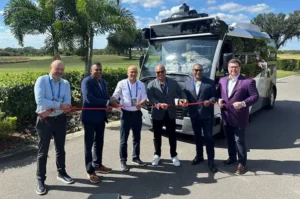
Waymo officially launched its commercial robotaxi service in Orlando on February 24, covering nearly 60 square miles centered around the I-4 corridor, from downtown Orlando south toward the International Drive and SeaWorld area, in fully driverless Jaguar I-PACE vehicles using cameras, radar, lidar, and AI. Orlando joins 10 U.S. cities where the service is commercially live. The rollout is intentionally gradual, with Waymo evaluating performance before expanding the service area. If you’re in that corridor, you may already have seen one. The Waymo One app is live now if you’d like to try it. The city’s notoriously complex roads, tourist congestion, and unpredictable weather make it a meaningful real-world test, not a sandbox. If you’ve ever driven I-4, you understand why this is either very confident or extremely brave. Probably both.
And that launch is not an isolated story. Orlando is simultaneously the world’s leading hub for human-machine simulation, one of the most ambitious entertainment technology markets on the planet, and now a live autonomous vehicle deployment city. At the venue and entertainment layer, where Orlando has always led, the Orlando Magic upgraded Kia Center with an ST 2110 production-control room, placing a mid-market NBA arena at the cutting edge of global IP broadcast infrastructure. A transparent glass basketball court debuted locally. Epic Universe’s tunnel transit system continues to take shape, making Universal’s upcoming park one of the most technically ambitious entertainment builds anywhere in the world. Creative City Project’s IMMERSE in downtown Orlando last weekend asked what it truly means to be “immersed,” a question this city has been answering professionally and at scale for six decades. From military simulation at CFRP to Loyal Pyczynski’s keynote on his arc from Orlando simulation to Meta, this is one continuous story about this city’s mastery of human experience design. It deserves to be told as one story.
Nationally, the AI infrastructure arms race produced a signal worth watching: Meta committed to 6 gigawatts of AMD GPUs just days after an expanded Nvidia deal, reflecting AI compute demand that has outpaced any single supplier’s capacity. EA’s $55 billion go-private deal, which has not yet closed and is expected to finalize no earlier than April 2026, along with its experiment licensing an AI voice clone of a football commentator for EA Sports FC, are early previews of how radically gaming economics are shifting. EA has told employees there will be “no immediate changes” as a result of the transaction. EA’s Tiburon studio in downtown Orlando is one of the company’s largest and most storied development teams, and Orlando’s gaming community is watching closely to see how private ownership reshapes priorities. Adaptive gaming technology expanding access for players with disabilities shows the human dimension of that innovation. Construction tech adoption profiled in Orlando and Univision Computers expanding managed IT services into DeLand reflect digital transformation reaching every corner of the regional economy, not just the glamorous parts.
Read more:
Space and Launch
The Space Coast, technically its own region but spiritually Central Florida’s most important backyard, had a fortnight that felt like a highlight reel interrupted by a blooper reel. Three launches headlined the period. ULA’s Vulcan rocket delivered two GSSAP reconnaissance satellites to geosynchronous orbit on February 12 in its longest mission to date, a national security payload for the U.S. Space Force’s Geosynchronous Space Situational Awareness Program. SpaceX Crew-12 docked astronauts at the ISS. And 29 more Starlink satellites are now blanketing the skies above Cape Canaveral. The region is not playing around.
Then the plot twists arrived. A solid rocket motor anomaly on the Vulcan flight prompted the U.S. Space Force to pause all national security Vulcan launches pending investigation, putting future GPS III satellite deployments in a holding pattern. NASA, meanwhile, publicly announced a March 6 Artemis 2 launch target and then, less than 24 hours later, began rolling the rocket back to the Vehicle Assembly Building because of a helium flow interruption in the SLS upper stage. The new target is no earlier than April 1, a scheduling coincidence NASA has not yet publicly addressed. And in the middle of all that, meet Amy Lendian: a 67-year-old UCF Online history student who was laid off during COVID in her 60s, pivoted into aerospace, and as a contractor supporting the Kennedy Space Center launch team will be sitting at the console managing fire protection systems for the Artemis II launch, the same role she held for Artemis I. She is currently finishing the degree she started 50 years ago. The Artemis delay is frustrating for a lot of people. Amy Lendian among them.
On the strategic side, SpaceX acquired xAI on February 2, creating a combined entity valued at approximately $1.25 trillion. In the days before closing, SpaceX filed an FCC application to deploy up to 1 million solar-powered satellites functioning as orbital AI data centers. For context, there are roughly 14,500 active satellites in orbit today. Analysts project the 2030s as a more realistic commercial timeline; Musk has suggested cost parity within two to three years. This is the AI infrastructure story and the space story converging in real time, with Orlando’s simulation, defense, and engineering community sitting directly in the path of what gets built next. A new Capital Analytics aerospace investment report maps the regional pipeline. USF’s expanding space research program and an Embry-Riddle professor leading a $7.2 million federally funded space weather research project confirm that the region’s universities are active contributors to the Space Coast economy, not just talent feeders.
Read more:
Education, Research and Workforce
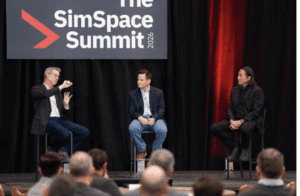
UCF is in a moment, and this week made it undeniable. The university publicly launched “Go For Launch,” a $3.5 billion fundraising campaign, the most ambitious in its 60-year history, with $2 billion in early commitments already secured before the public announcement. The campaign is organized around four pillars: student success, discovery and innovation, future frontiers (AI, space, and immersive tech), and competitive excellence. In the same breath, UCF stood up a new School of Technology, Leadership and Innovation designed to close the gap between what organizations invest in tech and what they actually get out of it. UCF President Alexander Cartwright took the stage at the Lake Nona Impact Forum alongside the presidents of Dartmouth and UPenn, moderated by Microsoft Research’s Peter Lee, on higher education’s role in the AI era. His framing was the right one: UCF was built in the 1960s to solve applied problems for NASA and the space race. That’s not nostalgia. That’s institutional identity. And it’s the brand promise Orlando needs to own, a university and a city built not for prestige, but for impact.
The research pipeline is keeping pace. UCF and Virtuix revealed a humanoid robot controlled by the Omni One VR treadmill, either the coolest thing in robotics or the premise of a Black Mirror episode, possibly both, and a direct example of Orlando’s simulation and gaming DNA being applied to the next frontier. The University of Florida developed photonic chip technology using light instead of electrical signals to improve chip-to-chip communication, a potential breakthrough in computing speed and energy efficiency with real commercial implications for semiconductor design. UCF engineers are simultaneously working on storm preparedness and cybersecurity, mapping directly onto the region’s defense and infrastructure priorities.
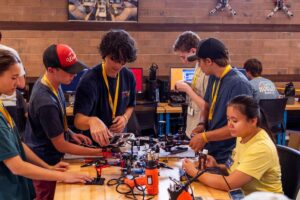
The talent pipeline extends well beyond university walls. The AOA Scholars Program launched in partnership with UCF to feed talent directly into the attractions industry. Orlando K-12 students got hands-on with power grid basics in an interactive workshop. And the Digital Exploration Center opened in UCF Libraries, expanding access to research and creative production tools for the next generation of builders. The pipeline starts early here, and UCF’s $3.5 billion campaign signals the institution intends to keep it that way.
Read more:
In Case You Missed It
- UCF Launches School of Technology, Leadership and Innovation — Via Team Orlando, signaling the defense and simulation community sees this school as a future partner and talent pipeline
- This Week’s Regional Perspective, Feb. 13 — Orlando Economic Partnership regional roundup
- This Week’s Regional Perspective, Feb. 20 — OEP roundup; OEP also selected as one of 12 organizations nationwide for JFF’s Skills First Ecosystems initiative, supported by Walmart
- Univision Computers Expands Managed IT Services in DeLand, Florida — IT infrastructure expanding into outlying Central Florida markets
- UCF Libraries Launches Digital Exploration Center — New resource expanding research and creative production access for students and the broader community
- AOA Scholars Program Launches in Partnership with UCF — New talent pipeline connecting graduates directly to the attractions industry
- Orlando Students Learn Power Grid Basics in Interactive Workshop — Building STEM awareness at the K-12 level across the region
Keep the Momentum Going
Orlando is not waiting for permission to become a top-tier innovation hub. The launches are happening, the companies are scaling, the universities are investing, and the talent is here. What this region needs now is exactly what showed up in that room at the Dr. Phillips Center last Friday: people who show up, connect the dots, and do the work together.
Orlando’s brand promise has always been applied problem-solving at the intersection of technology and human experience. From the space race to military simulation to immersive entertainment to autonomous vehicles, this city builds things that work in the real world, for real people. That’s not a tagline. That’s sixty years of proof. Our job now is to make sure the world knows it.
If this newsletter sparked an idea, introduced you to a company worth knowing, or reminded you why you chose to build here, share it. Forward it to a founder who needs the context, a corporate partner who should be paying attention, or an investor who keeps asking why Orlando. The story is only as loud as the people telling it.
— Sheena
CEO, Innovate Orlando
sheena@innovateorlando.io

Join the movement by becoming an investor in Innovate Orlando to propel Central Florida’s tech and innovation ecosystem
| Join Now |
Investor Highlight
Florida High Tech Corridor is a vital force in Central Florida’s innovation ecosystem, bringing together world-class research institutions like the University of Central Florida and a collaborative network of industry, academia, and economic partners to grow high-tech industries and opportunities across a 23-county region. Anchored by Orlando’s thriving technology community,
The Corridor fuels innovation through strategic research partnerships, workforce development programs, and initiatives that help startups and established firms alike advance cutting-edge technologies and talent pipelines. Its dedication to boundary-breaking collaboration and community-driven innovation accelerates economic growth, strengthens Orlando’s role as a regional tech hub, and fosters long-term prosperity across sectors from aerospace to life sciences.
Learn more at: Florida High Tech Corridor
Innovate Orlando News
AMPLIFY CENTRAL FLORIDA CONSORTIUM: VISIBILITY FOR THE REGION’S INNOVATORS
Central Florida is emerging as a national hub for technology, simulation, space, health innovation, and cleantech but small and mid-sized enterprises often lack the resources to compete with global brands shaping online narratives. The new Amplify Central Florida Consortium provides shared-investment marketing infrastructure for forward-thinking companies, delivering enterprise-grade branding, multimedia production, and strategic communications.
Membership tiers (preferred rates through March 2026):
- Visibility Package: $450 (BlinkCo. Mag feature reaching 1M+ viewers)
- Video Essential Kit: $2,975/mo (monthly production session, 3-mo commitment)
- Lifestyle Story Kit: $4,025/mo (30-day content plan + cinematic video)
- Prestige Feature Kit: $5,075/mo (8-12 short-form videos + BlinkCo. distribution)
Led by Amóre Marketing & Productions, the Consortium elevates individual companies while strengthening Central Florida’s competitive profile.
Perfect timing ahead of the Orlando Tech Summit, contact Soyini Chang (soyini@blinkcomedia.com | 646-932-0907) to explore membership.
| More Info |
Orlando’s tech scene, all in one place.
From meetups to moonshots, if it’s happening in innovation, it’s on our calendar.
| Events |
Got Tech News or Events? Share them with us!
We want to make sure we’re highlighting all the incredible things happening in Orlando’s tech community! If you have an upcoming event, major milestone, or exciting news that we may have missed, send us the details.
| Submit Here |
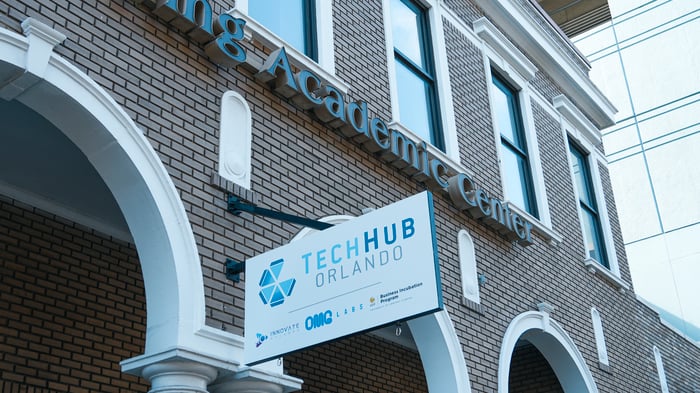
Need a venue for your next event or workshop? Host at Tech Hub Orlando!
| Check us out! |